Why Washington’s Tax Credit Changes the Trade-In Math
 0
 0
Direct Answer
A high trade-in offer can look attractive, but the number on the appraisal sheet does not tell you everything about the deal. The purchase price of your next vehicle, applicable sales tax, loan payoff, and other transaction costs all affect how much value you actually receive.
For anyone researching car trade-in value in Washington, understanding the state’s trade-in tax treatment is especially important. An eligible trade allowance can reduce the taxable balance of a replacement-vehicle purchase, meaning the financial benefit may extend beyond the amount credited for the vehicle itself.
Look Beyond the Trade-In Allowance
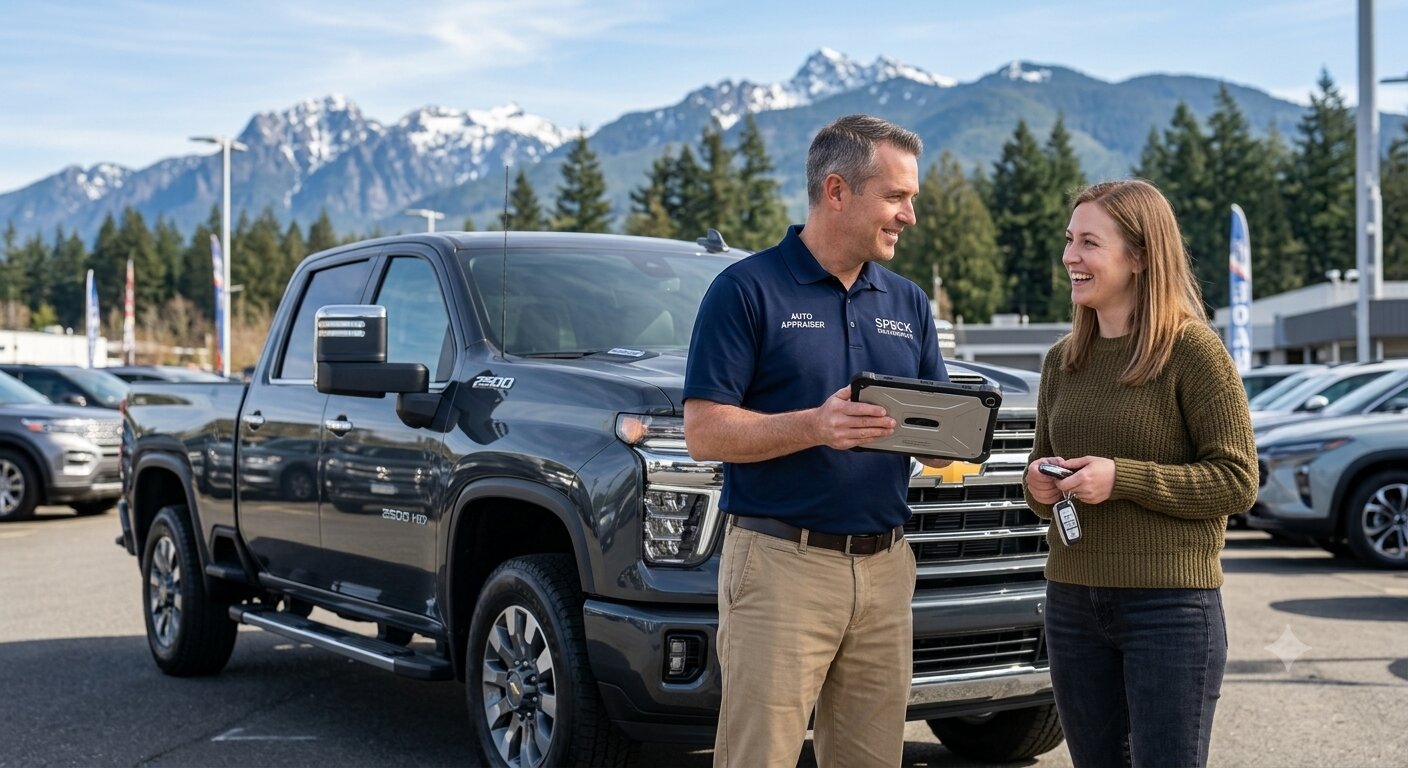
The trade-in allowance is the amount a dealership offers for your current vehicle. It is important, but it should not be the only figure you evaluate.
A dealership transaction combines several amounts:
- The negotiated price of the replacement vehicle
- The trade-in allowance
- Any outstanding loan payoff
- The taxable purchase balance
- Applicable taxes and fees
- Financing terms, including the interest rate and loan length
Ask for these figures separately instead of relying on a single monthly payment or advertised trade-in amount. A written breakdown makes it easier to understand where the value comes from and whether the transaction fits your budget.
Understand Washington’s trade-in tax treatment
Washington generally allows an eligible trade-in allowance to reduce the purchase price used to calculate sales tax on a replacement vehicle. Instead of calculating tax on the entire purchase price, the eligible trade value is deducted first.
This can make a dealership trade-in financially different from selling the vehicle privately. A private buyer may offer more cash, but that sale does not provide the same trade-in tax offset on a separate vehicle purchase.
The Washington Department of Revenue provides guidance on vehicle sales and trade-in tax treatment. Review the applicable rules and ask the dealership to show the calculation on your transaction worksheet.
Compare the complete financial outcome
Consider two possible routes: trading the vehicle to a dealership or selling it privately. A private sale may produce a higher direct payment, but it also requires time to advertise the vehicle, communicate with potential buyers, arrange meetings, and handle payment and title paperwork.
There may also be payment risks, including fraudulent checks. When comparing the two routes, account for the potential tax benefit of an eligible dealership trade-in as well as the effort and costs involved in a private transaction.
The strongest car trade-in value in Washington is not necessarily the highest isolated offer. It is the option that leaves you in the better financial position after the complete transaction is considered.
Calculate Your Equity Before Negotiating
If you still owe money on your current vehicle, the loan payoff must be included in your calculations. The trade-in allowance and the amount owed to your lender are separate figures.
Positive equity exists when the trade-in allowance is greater than the outstanding loan payoff. The difference can be applied toward the next vehicle purchase.
Negative equity exists when the payoff is greater than the trade-in allowance. The remaining balance still needs to be addressed in the transaction and can affect the financing of your next vehicle.
For example, a vehicle with a strong trade-in allowance may still leave you with little usable equity if its loan balance is nearly as high. That is why it is important to obtain an accurate payoff figure from your lender rather than estimating what you owe.
Ask for a clear payoff breakdown
Before agreeing to the transaction, request confirmation of the current loan payoff and how the dealership plans to handle it. Review how any positive or negative equity appears in the purchase paperwork.
This helps prevent confusion when comparing different offers. Two dealerships might offer similar allowances but present different overall purchase figures.
Understand Why Your Vehicle’s Condition Still Matters
Even when the financial calculation is your main concern, the vehicle’s condition remains an important part of the appraisal. Dealerships consider mileage, maintenance, mechanical condition, appearance, and resale potential when determining an offer.
Washington’s regional conditions can also matter. Vehicles in the Pacific Northwest may encounter damp winters, road treatment in mountainous areas, and dusty rural roads in agricultural communities.
Local demand varies as well. Hybrid vehicles and all-wheel-drive crossovers may appeal to Seattle-area commuters, while four-wheel-drive pickups can attract interest in Tri-Cities, Yakima, and surrounding rural communities. Seasonal demand may also influence interest in all-wheel-drive vehicles before winter.
These factors do not guarantee a particular offer, but they help explain why the same vehicle may receive different appraisals from different buyers.
Support Your Appraisal With Maintenance Records
A documented service history gives the appraiser information about how the vehicle has been maintained. Gather available invoices and records for oil changes, brake replacements, fluid service, tire work, and professional repairs.
Arrange the documents chronologically so they are easy to review. Records can help demonstrate that routine maintenance was completed and provide context for the vehicle’s current condition.
Presentation also matters. Before an appraisal appointment:
- Remove personal belongings, trash, and loose charging cables.
- Vacuum the carpets, seats, cargo area, and spaces beneath the seats.
- Wash the exterior and clean the wheels, trim, and windows.
- Replace inexpensive burnt-out bulbs.
- Correct low fluid levels and inflate matching tires properly.
- Consider repairing a small windshield chip when the cost is reasonable.
Avoid paying for major mechanical repairs without first comparing the repair expense with the possible improvement in the trade-in allowance. A dealership may be able to handle certain repairs through its own service department and parts resources.
Use Market Research to Judge the Offer
Online valuation tools can help you establish a starting point before visiting a dealership. Kelley Blue Book and Edmunds are examples of established automotive research resources.
Enter accurate vehicle information, including the VIN, trim, mileage, drivetrain, options, and condition. Select trade-in value rather than retail or private-party value. Be realistic about the condition grade because an overly generous assessment can create an unrealistic benchmark.
Use more than one valuation source and compare the results. Then request written appraisals from multiple buyers. Review the assumptions behind each offer, including any inspection conditions that could change the final amount.
A defensible car trade-in value in Washington comes from combining realistic market estimates with offers that buyers are prepared to honor.
Avoid Financial and Appraisal Mistakes
A few mistakes can make it harder to evaluate the transaction accurately.
Hiding known problems: Disclose mechanical issues, previous accidents, and body repairs. Vehicle history reports and diagnostic tools may reveal information that affects the appraisal. If repairs were completed professionally, bring the available documentation.
Focusing only on monthly payments: A lower payment does not automatically mean a better deal. Review the vehicle price, interest rate, loan term, trade allowance, and total financing figures.
Ignoring the loan balance: A trade-in offer should always be considered alongside the current payoff. Otherwise, you may overestimate how much equity is available for your next purchase.
Forgetting the paperwork: Keep registration information current and have the title available when applicable. Bring all key fobs, since replacing missing smart keys can be expensive.
Overvaluing custom accessories: Aftermarket stereos, specialized wheels, and custom racks may not increase resale value. Restoring factory equipment may be worth considering when practical.
Before handing over the vehicle, also perform a factory reset on the infotainment system. Remove saved addresses, garage codes, phone contacts, and paired devices.
Frequently Asked Questions
How does Washington’s trade-in sales-tax treatment affect my purchase?
An eligible trade-in allowance generally reduces the taxable balance of the replacement-vehicle purchase. This can lower the sales tax owed compared with calculating tax on the full purchase price. Ask for a written transaction breakdown to see the effect.
Is a higher dealership trade-in offer always better?
Not necessarily. Compare the vehicle purchase price, allowance, taxes, fees, loan payoff, and financing terms. A higher allowance may not produce the best overall result if other parts of the transaction are less favorable.
What happens if I owe more than my vehicle is worth?
That situation is called negative equity. The difference between the loan payoff and trade-in allowance must be addressed as part of the transaction and may affect the financing of your next vehicle.
Should I sell privately instead of trading in?
A private sale may bring a higher direct payment, but you should also consider the time, advertising, payment risks, title work, and potential loss of the dealership trade-in tax offset. Compare the complete financial outcomes before deciding.
Can I trade in a vehicle with an accident history?
Yes. An accident may reduce the vehicle’s value, but it does not automatically prevent a trade-in. Documentation showing professional repairs can help the appraiser understand the vehicle’s condition.
Final Thoughts
Evaluating car trade-in value in Washington requires more than comparing appraisal numbers. The real financial result depends on the trade allowance, loan payoff, replacement-vehicle price, eligible tax treatment, and other transaction costs.
Gather accurate payoff information, research realistic market values, request written offers, and review the entire purchase worksheet before making a decision. When you understand how each figure affects the final cost, you can judge whether a trade-in offer truly works in your favor.
Before you begin the trade-in process, taking a few minutes to explore our online resources or consulting with our auto finance department can help you see exactly how your trade-in equity impacts your upcoming monthly payments
Ready to find your next vehicle? Visit Speck Dealerships today — or browse our inventory online.
Related reading: Washington car-buying guide; Carvana versus local dealers.