
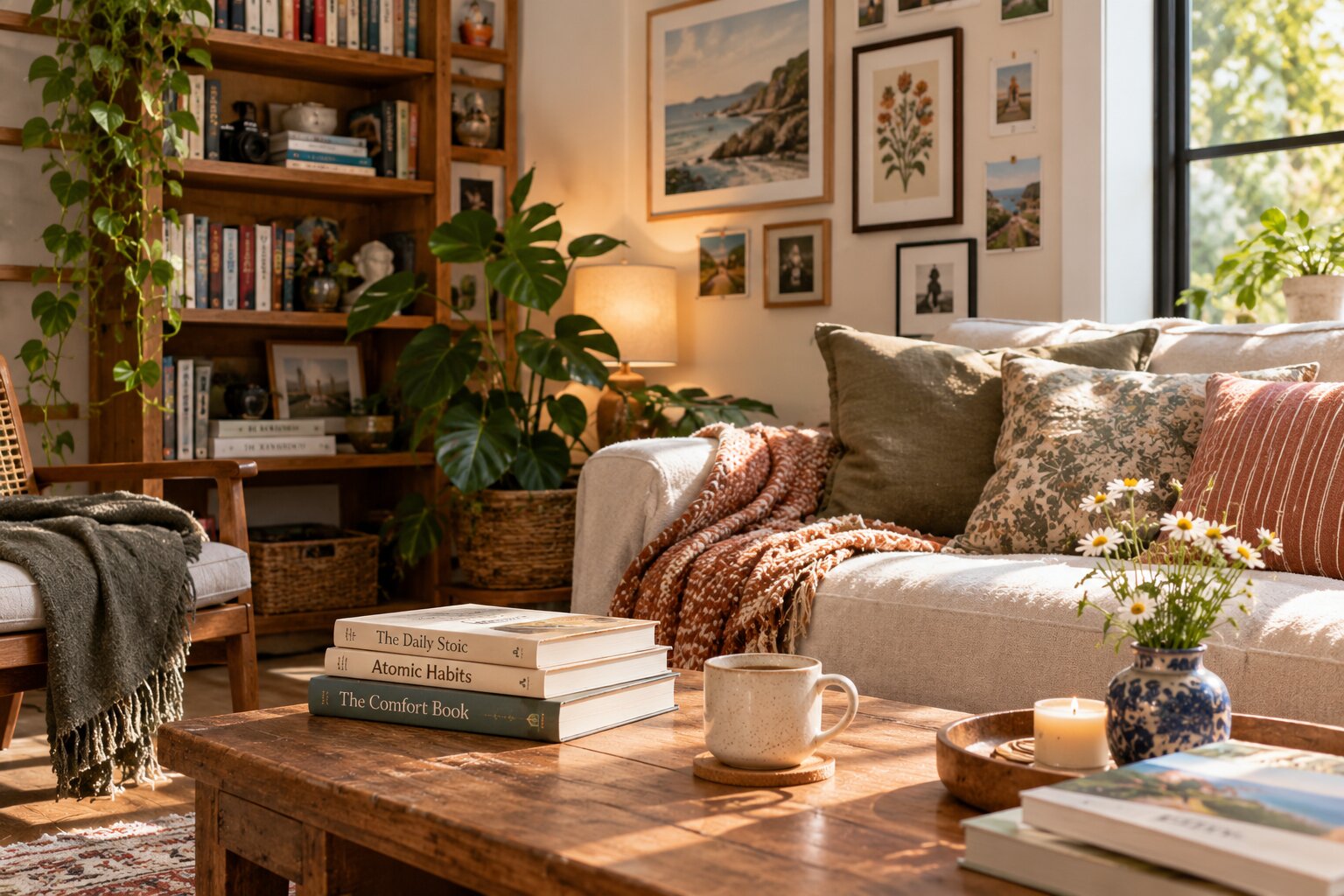
How Books and Reading Corners Make a Home Feel Lived-In
 0
 0
Direct Answer
A home often reflects its residents through small everyday habits. A book left beside the bed, a reading chair near a window, or a shelf filled with well-used paperbacks can reveal more about the people living there than a perfectly coordinated display.
As decorating preferences move beyond strict minimalism, these personal details are becoming part of what makes a room feel welcoming. Lived-in spaces do not have to be filled with possessions. They simply make room for the activities, interests, and familiar objects that give a home its character.
Reading is one example. Instead of treating books as accessories, homeowners can arrange their surroundings to make reading easier and more enjoyable.

Make Reading Part of the Room’s Everyday Layout
Start by thinking about where reading naturally happens. Some people prefer a quiet bedroom corner, while others read on the sofa, at the kitchen table, or beside a window.
The best location is usually the one that already fits the daily routine. A dedicated reading room is not necessary.
If the sofa is where you spend most evenings, keep a small selection of books nearby. If you read before sleeping, a bedside shelf can hold your current title and reading glasses. A basket beside a favorite chair can provide a convenient place for paperbacks and magazines.
These arrangements make books accessible instead of turning them into objects that are displayed but rarely used.
Create a Reading Corner Around Comfort
A useful reading area does not require expensive furniture or elaborate styling. Begin with a seat that feels comfortable enough for the amount of time you usually spend reading.
Lighting deserves equal attention. Test the lamp at the time of day when you normally read, since a corner that looks bright in the afternoon may need additional light in the evening.
A small table or shelf can hold a drink, notebook, glasses, or other essentials. Keep electrical cables and furniture out of the walking path so the area remains convenient.
You can add a knitted throw, cushion, or woven basket if these items make the space more comfortable. The aim is to create an area that encourages a real habit rather than one that exists mainly for photographs.
Let Your Book Collection Develop Naturally
Books often accumulate over time. Some are favorites that people revisit, others are recent purchases, and some are waiting to be read.
Rather than arranging every title as a decorative display, organize books according to how you use them. Current reads can stay near your seating area, reference books can remain accessible at a desk, and older favorites can occupy the main bookshelf.
You can combine vertical and horizontal arrangements, leaving enough space to remove titles easily. A few photographs, small artworks, or meaningful objects can share the shelf without competing with the books.
If the collection becomes too large for the available space, consider rotating titles or storing books that are not currently needed. This keeps the collection manageable while preserving the books that matter most.
Use Art and Objects to Reflect Your Interests
A reading area can also show interests beyond books. A framed illustration, a postcard, a secondhand painting, or a family photograph can give the corner a more personal character.
These objects do not need to follow one theme or come from the same collection. Their connection can be as simple as reflecting something the resident enjoys.
Materials can help bring the arrangement together. A wooden shelf, linen curtain, ceramic mug, and woven basket introduce different textures without requiring matching accessories.
This is one reason lived-in spaces can feel more distinctive than interiors designed around a single coordinated look. The objects have individual histories and purposes.
Make the Rest of the Home Support Quiet Activities
Reading is only one part of everyday life. A home may also need to accommodate remote work, hobbies, meals, family conversations, and rest.
Think about whether furniture and storage make these activities easier. A desk needs enough light and accessible supplies. A living room may benefit from flexible seating and a convenient place to store blankets. A hobby area needs a way to keep materials together when they are not being used.
The Journal of Environmental Psychology has published research examining relationships between home clutter and psychological well-being, including the role of perceived beauty. This does not mean personal belongings should be removed to create a spotless interior. It highlights the importance of considering how the home environment feels and functions.
IKEA’s Life at Home research also explores how comfort, identity, and belonging contribute to people’s experience of home. A room can be attractive, but its everyday usefulness matters just as much.
Keep Personal Displays Enjoyable to Maintain
Books, photographs, artwork, and collected objects can make a home feel meaningful, but they still need room and attention.
Choose which items deserve to remain visible. Keep frequently used books accessible, display a few favorite objects, and store other belongings until you want to use or rotate them.
Open surfaces are useful because they make ordinary tasks easier and prevent personal collections from becoming difficult to maintain. You do not need to fill every shelf or decorate every corner.
The balance will look different in each home. Someone with a large book collection may prefer extensive shelving, while another person may be happier with a few favorite titles and more open space.
The point is to make the home reflect its residents rather than follow a fixed decorating formula.
Lived-in spaces that feel comfortable can also make it easier to slow down and enjoy the things you love, whether that’s reading about soft ambition or simply taking a quiet break at the end of the day.
Frequently Asked Questions
How can books become part of home decor?
Books can be arranged on shelves, beside a reading chair, or in small stacks on a coffee table or bedside table. Keep the titles you use most often accessible, and avoid overcrowding surfaces.
What does a reading corner need?
A comfortable seat, suitable lighting, and a small place for essentials are enough to begin. A blanket, cushion, or nearby bookshelf can make the area more inviting.
How do I make a bookshelf look personal?
Include books you genuinely enjoy, vary the arrangement, and add a few meaningful objects or photographs. Leave enough space to reach and remove books easily.
Can a small home have a reading area?
Yes. A corner of the living room, a space beside the bed, or even a comfortable chair near a window can work. The area does not need to be a separate room.
Do lived-in spaces have to look messy?
No. A personal home can still be organized. The difference is that its belongings reflect real interests and routines instead of being selected only to create a perfectly uniform appearance.
Final Thoughts
A home becomes more welcoming when it makes room for the things people genuinely enjoy. For readers, that might mean a comfortable chair, a shelf of familiar books, or a quiet corner that becomes part of an evening routine.
Lived-in spaces are not about displaying everything a person owns. They are about creating an environment where personal interests and everyday activities have a natural place.
A room does not need to look untouched to feel beautiful. Sometimes the most meaningful detail is simply a well-loved book waiting to be opened again.
Further Reading for the Soul
- Why Do Women Crave Comfort Fiction?
- How The Seat of the Soul Influenced Tiffani Thiessen
- Related reading on boostupblogging.com: mixing a farmhouse media console into a modern room; choosing coffee-table books for decor and reading.