Why Marginalia Is Becoming a Social Media Trend
 0
0
 0
0
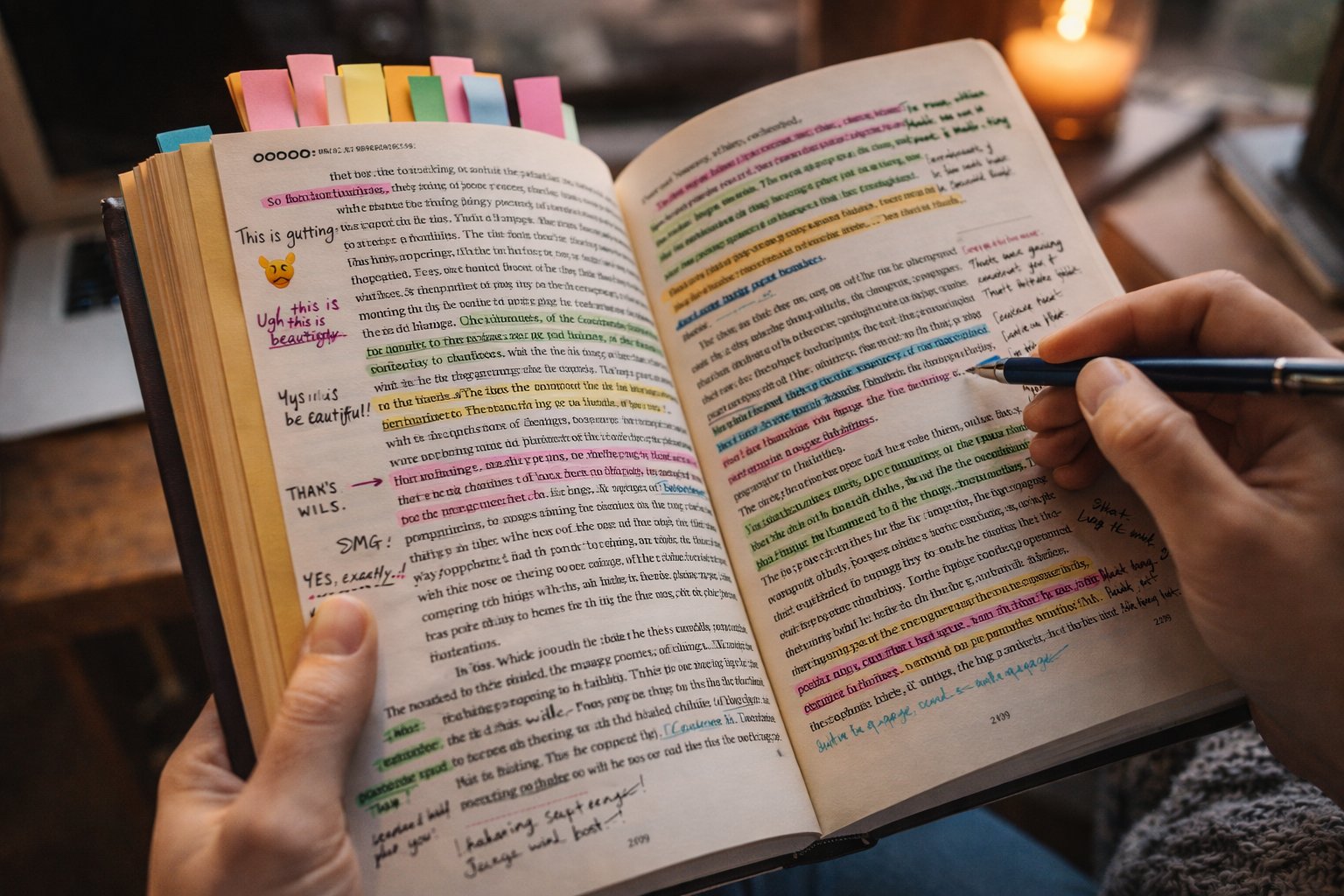
Marginalia, the act of writing notes and personal reflections in the margins of a book, has transitioned from a private scholarly habit into a viral social media phenomenon. In 2026, digital platforms like TikTok and Instagram are filled with “bookstagrammers” and “booktokers” showcasing meticulously annotated pages. Specifically, what was once considered a “taboo” that devalued a book is now celebrated as a way to turn reading into a visually striking and interactive experience.
This trend is driven by a desire for authenticity in an increasingly AI-saturated digital world. By sharing their physical markings, readers offer a window into their private thoughts and emotional reactions to a text. Consequently, it transforms a solitary activity into a communal one, allowing users to connect over shared interpretations and raw, immediate feelings.
The Rise of “Bookishness” and Aesthetic Artifacts
In the social media landscape of 2026, books are no longer just sources of information; they have become “aesthetic artifacts”. Furthermore, this shift is part of a broader cultural movement known as “bookishness,” in which the physical book is treated as a work of art. Readers use high-quality hardbacks, vibrant highlighters, and color-coded tabs to create visually appealing content that stands out in a crowded feed.
For younger readers, specifically Gen Z and Millennials, the appeal lies in the performative yet personal nature of annotation. Sharing a photo of a heavily underlined passage with a “swoony” or “heartbroken” comment serves as a form of self-expression. In addition, it signals to their community who they are as a person and how they engage with the world.
Why Marginalia Appeals to the Modern Reader
The resurgence of marginalia reflects a psychological need for human connection and “proof of life” in digital spaces. As social media users encounter more AI-generated content, they crave the “quality reset” that comes from seeing a real person’s handwriting. Instead of favoring the pristine look of the past, this behavior celebrates a “lived-in” book that tells a unique story.
Specifically, the trend offers several psychological benefits:
- Emotional Catharsis: Writing in margins allows readers to vent their feelings, making the book a safe space for emotional exploration.
- Dialogue with the Author: Annotation turns a static product into a collaborative conversation between the reader and the creator.
- Memory Preservation: Marginalia acts as a “literary map,” allowing readers to revisit their state of mind from years prior.
This interactive reading experience is documented extensively in the American Library Association‘s 2026 report on changing literacy habits. While libraries discourage writing in their own collections, they have noted a surge in “community annotation” events where patrons discuss how they personalize their own libraries. Notably, this shift toward a more hands-on relationship with literature often begins with A Powerful Book That Changed How I Live My Truth.
The Shift from Solitary to Social Reading
Historically, reading was a private act; however, the 2026 marginalia trend has effectively “gamified” the reading process. Readers now “tab” their books with specific color schemes to share these systems online. For example, they use pink for romance, blue for sadness, and yellow for foreshadowing. As a result, this creates a shared language within niche communities, such as those focused on “Romantasy” or dark academia.
This collective behavior has a significant impact on the publishing industry. Specifically, books with wide margins and high-quality paper are marketed directly to the “annotation community”. Publishers realize that a book’s shareability on social media can be just as important as its narrative quality. Moreover, this communal aspect helps readers navigate The Mind’s Role in Identity and Personal Freedom as they compare their notes with others.
Broader Social Meaning of the Trend
The marginalia trend is a symptom of a society looking for ways to slow down. In a fast-paced digital environment, pausing to write a note requires a level of focus that is becoming increasingly rare. Ultimately, it reveals a modern culture that values “manual” hobbies and physical permanence. A book with handwritten notes cannot be deleted or algorithmically altered; it is a permanent record of a human experience.
Key cultural impacts include:
- Hyperlocal Community Building: Online trends often lead to in-person “annotation parties” where local readers swap marked-up copies.
- Status Signaling: Demonstrating deep engagement with complex texts serves as a form of intellectual social capital.
- Anti-Consumerism: The trend emphasizes using and “wearing out” an item rather than keeping it for resale value.
This focus on the human touch separates modern “bookish” culture from the polished influencer campaigns of the early 2020s. According to research from the Institute of Museum and Library Services, the trend is actually helping to increase physical book sales among younger demographics.
Conclusion
The rise of marginalia as a social media trend in 2026 is a fascinating blend of historical tradition and modern digital behavior. By turning the margins of their books into a canvas for self-expression, readers are reclaiming the “humanity” of the reading experience. In the end, this cultural shift suggests that as the world becomes more digital, the desire for physical, “messy,” and authentic interaction with literature will only continue to grow.